


In the world of surveying, engineering, and construction management, the choice of drone data collection technology goes beyond mere flight capability. For professionals seeking centimeter accuracy, the key issue is determining the most appropriate sensor for each scenario. Here we will delve into the fundamental differences between photogrammetry (RGB) and LiDAR (Light Detection and Ranging), analyzing their applications, limitations, and associated processing load.
Photogrammetry (RGB): The Traditional View and Its Limitations
Photogrammetry is based on the acquisition of multiple overlapping digital images of an area, which are then processed to reconstruct the three-dimensional geometry of the terrain. This process, known as Structure from Motion (SfM), uses complex algorithms to identify corresponding points in different photographs and, from them, generate a dense 3D point cloud.
Advantages and Applications
Historically, drone photogrammetry has been the most cost-effective solution for a variety of applications. The ability to generate color orthophotos and textured 3D models makes it ideal for mapping visible surfaces, monitoring construction sites in open areas, calculating earthwork volumes on exposed soils, and detailed visual inspections. Centimeter accuracy can be achieved with the use of Ground Control Points (GCPs) or RTK/PPK (Real-Time Kinematic/Post-Processed Kinematic) systems integrated into the drone, although the final quality depends intrinsically on lighting, surface texture, and the quality of the images captured.
The Achilles’ Heel: Dense Vegetation
The main limitation of photogrammetry arises in areas with dense vegetation. Since the technology is based on capturing reflected light and identifying visible features, tree canopies and foliage prevent the camera from “seeing” the ground below. Consequently, the generated 3D model represents the top of the vegetation, resulting in a Digital Surface Model (DSM) that does not reflect the true topography of the terrain. For applications that require an accurate Digital Terrain Model (DTM)—i.e., a representation of bare ground—photogrammetry becomes unsuitable in forested environments or those with significant vegetation cover.
LiDAR (Light Detection and Ranging): The Solution for the Invisible
In contrast, LiDAR is an active remote sensing technology that emits laser pulses toward the ground and measures the time it takes for those pulses to return to the sensor. From these measurements, it is possible to determine the distance and, consequently, the 3D position of millions of points in space. A crucial feature of LiDAR is its ability to record multiple returns for each laser pulse.
Vegetation Penetration and Accurate MDT
It is precisely this ability to capture multiple returns that gives LiDAR its distinctive advantage in areas with dense vegetation. While photogrammetry is blocked by tree canopies, LiDAR laser pulses can penetrate through small openings in the foliage, reaching different levels of vegetation and, crucially, the ground. Ground returns can then be isolated from vegetation returns, allowing the creation of a highly accurate DTM that represents the actual topography of the terrain, even under dense forest cover. This capability makes LiDAR indispensable for topographic surveys in challenging environments where photogrammetry would fail.
Independence from Light Conditions
Another significant advantage of LiDAR is its independence from light conditions. As an active technology that emits its own light source (laser), LiDAR can operate effectively in low-light conditions, such as at dawn, dusk, or in shady areas, where photogrammetry (which depends on sunlight) would struggle or produce lower-quality results.
The Point Cloud: A Fundamental Difference
Both technologies generate 3D point clouds, but their nature and density differ significantly. The photogrammetry point cloud is derived from correlated pixels in images, which means that the density and quality of the points are linked to the image resolution and the software’s ability to find matches. In areas with uniform texture or vegetation, correlation can be difficult, resulting in less dense or noisy point clouds.
On the other hand, the LiDAR point cloud is composed of direct distance measurements, resulting in a more accurate and uniform representation of the surface. The density of the LiDAR point cloud is generally much higher and more consistent, regardless of surface texture, and each point contains laser return intensity information that can be used for further classification and analysis.
Processing Software: Pix4D vs. DJI Terra
The choice of processing software is as crucial as the choice of sensor, directly impacting workflow efficiency and the quality of results. Two of the most prominent software programs on the market are Pix4D and DJI Terra, each with its own unique features.
Pix4D: Power and Flexibility for Photogrammetry
- Pix4D, with products such as PIX4Dmapper and PIX4Dmatic, is recognized for its robustness and flexibility in processing photogrammetric data. It is a cutting-edge solution for transforming aerial and terrestrial images into high-precision digital models, orthomosaics, and point clouds.
- Focus: Advanced photogrammetry, with sophisticated algorithms for 3D reconstruction from RGB images.
- Processing Load: Photogrammetric processing is CPU- and GPU-intensive, especially for large datasets, due to the need to correlate thousands of images. PIX4Dmatic, for example, has been optimized to handle more than 5,000 images, offering significant speed gains compared to PIX4Dmapper.
- Hardware Flexibility: One of the great advantages of Pix4D is its compatibility with a wide range of drones and cameras from different manufacturers, offering users the freedom to choose the hardware that best suits their needs.
- LiDAR: Although the main focus is photogrammetry, PIX4Dmatic has begun to integrate workflows for LiDAR data, especially those acquired with PIX4Dcatch, allowing the import and manipulation of LiDAR point clouds.
DJI Terra: Optimization and Efficiency for the DJI Ecosystem
DJI Terra is 3D modeling software developed specifically for DJI Enterprise drones. Its main strength lies in its seamless integration with DJI hardware, providing a simplified workflow for data collection, processing, and application.
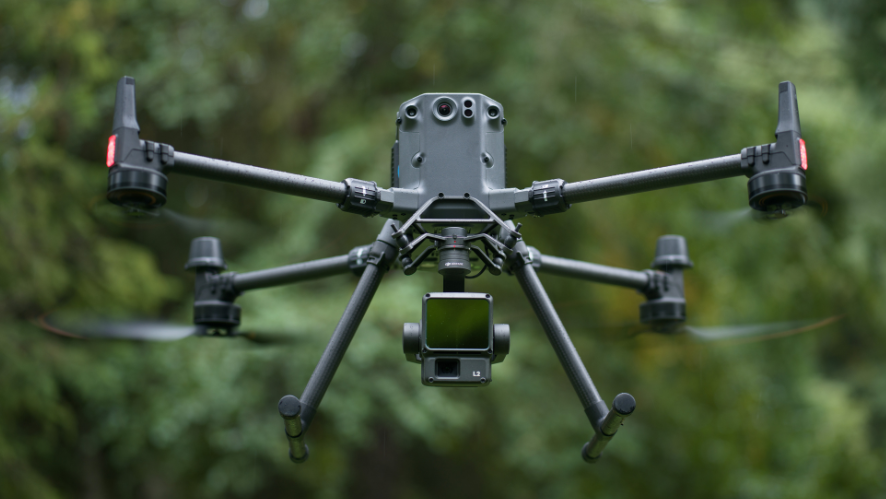
- Focus: Optimized for the DJI ecosystem, including sensors such as Zenmuse P1 (photogrammetry) and Zenmuse L1/L2 (LiDAR).
- LiDAR Processing Load: DJI Terra excels at processing LiDAR data. Thanks to its optimization for DJI LiDAR sensors, it can process large volumes of data very efficiently. For example, DJI Terra has been shown to process over 700 GB of LiDAR data in a single day to create dense digital terrain and elevation models. LiDAR processing is inherently less demanding in terms of pixel matching than photogrammetry, focusing on the accurate georeferencing of laser points.
- Efficiency: The software is designed for efficiency, capable of processing up to 500 photos per hour for smaller tasks and scaling up to 2,000 photos per hour for larger projects. For large datasets, DJI Terra employs cluster reconstruction technology, allowing it to process 6,000 photos with only 1 GB of RAM or 30,000 photos in 21 hours using five working devices.
- Specific Tools: It offers tools for point cloud classification, which is crucial for extracting DTMs from vegetated areas, allowing, for example, the digital “removal” of tree canopies to reveal structures on the ground.
Software Comparison

When to Choose Which: Practical Applications
The decision between photogrammetry and LiDAR should be guided by the characteristics of the project, the type of terrain, and the accuracy required for the final product.
Scenarios for Photogrammetry
- Open and Urban Areas: Ideal for surveying areas with little or no vegetation, such as construction sites, quarries, agricultural areas without tall crops, and building facade inspections.
- Textured 3D Models: When realistic visual representation and texture are important, such as for real estate marketing, heritage documentation, or visual inspections.
- Cost-Effectiveness: For projects with tighter budgets and where dense vegetation limitations are not a critical impediment.
Scenarios Where LiDAR is Indispensable
- Terrain with Dense Vegetation: For creating accurate DTMs in forests, Atlantic Forest areas, plantations, or any environment where the ground is hidden by vegetation. Examples include forest mapping, natural resource management, and watershed studies.
- High-Precision Topography in Complex Environments: In civil engineering projects, such as planning roads, railways, or dams in rugged and vegetated terrain, LiDAR ensures the accuracy needed to calculate volumes and terrain profiles.
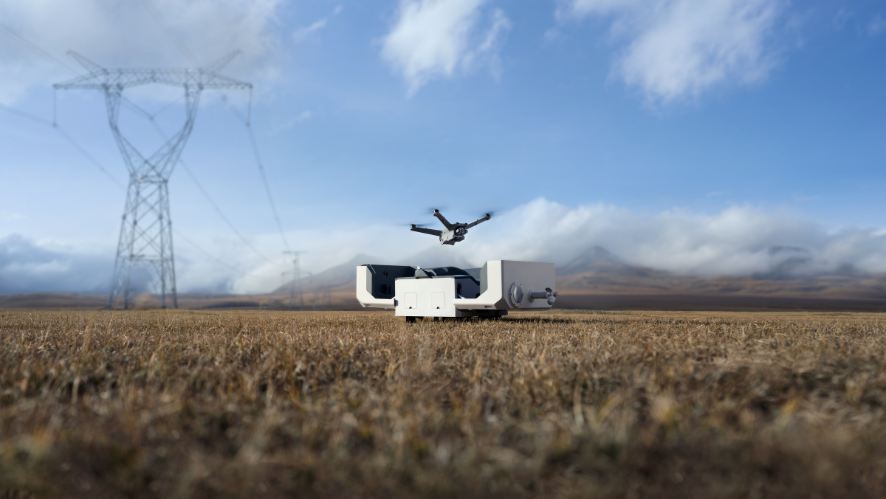
- Transmission Lines and Infrastructure: LiDAR is crucial for inspecting transmission lines, allowing the detection of thin cables and accurate measurement of the distance between vegetation and infrastructure, preventing failures and optimizing maintenance.
- Archeology and Geology: The ability to digitally “remove” vegetation allows archaeologists to discover ancient structures hidden in the ground, such as Mayan ruins, and geologists to map underlying geological features.
- Low Light Conditions: When surveying needs to be done in low light conditions or in environments with pronounced shadows.
Evolution of DJI Sensors: Zenmuse L1 vs. L2
DJI has driven the accessibility of LiDAR with its Zenmuse sensors. The Zenmuse L1 was a milestone, offering vertical accuracy of approximately 5 cm and horizontal accuracy of 10 cm. The evolution to the Zenmuse L2 brought significant improvements:
- Enhanced Accuracy: The L2 offers vertical accuracy of up to 4 cm and horizontal accuracy of 5 cm, making it even more reliable for demanding applications.
- Efficiency and Detail: With a longer detection range and a thinner laser beam (smaller spot size), the L2 results in cleaner, denser, and more detailed point clouds with greater penetration through vegetation.
To conclude…
For engineers, surveyors, and construction managers, the choice between photogrammetry and LiDAR is not a question of which technology is “better” in absolute terms, but rather which is best suited to the specific needs of each project. Photogrammetry remains a valuable and cost-effective tool for surveying open areas and where visual representation is a priority. However, when centimeter-level accuracy of bare terrain is imperative in densely vegetated environments, LiDAR becomes the indispensable choice. The laser’s penetration capability and direct generation of accurate DTMs, combined with the processing efficiency of software such as DJI Terra for LiDAR data, ensure that professionals have the right tools to tackle the most complex challenges of modern surveying.