


PRECISION AGRICULTURE
Vegetation indices
VEGETATION INDICES FOR KNOWING THE TERRAIN
Vegetation indices are an essential tool in precision agriculture, as they allow the conversion of image data into knowledge on the ground.
The indices that can be derived from multispectral images are different and, being all sensitive to changes in chlorophyll content and/or vegetative vigour, they allow detecting possible changes in plant physiology, through the indices it is possible to monitor the health status of crops.
CONTAGEM OF HIGH PRECISION PLANTS
Plant contamination is an essential task in productivity management. It allows farmers to estimate plant population, density, germination rates and plant health and make timely decisions that, ultimately, affect yield. Common methods of manual plant infection have been aided by producers for decades. They are based on visual inspection and calculation of plant mass in small predefined field areas. However, these methods require a lot of work and are long to be precise.
WHY AND WHEN IS AN ACCURATE PLANT COUNT NECESSARY?
There are situations in which a precise ground report is essential, but it is absolutely essential for a precise report that you intend to do:
– Check the quality of the crop, especially if you produce seeds;
– Understand areas of variable yield within fields;
– Obtain accurate data during R&D projects;
– Estimate yield accurately in the early stages;
– Detect outliers;
– Make timely decisions, such as partially replanting the field;
– Increase yield potential to meet production targets.
The following table summarises the most important indices:

Characteristics and applications
| Vegetation indices | Characteristics and applications | |
NDVI |
Normalized Difference Vegetation Index Normalized Difference Vegetation Index |
Index describing the normalised difference between the near infrared and visible red bands of vegetation cover. It can be used to estimate the vegetative vigour of plants, which will monitor their health status |
| BNDVI | Blue Normalized Difference Vegetation Index Normalized Difference Vegetation Index (NDVI) |
Red-band index using visible blue light, for areas sensitive to chlorophyll content |
| GNDVI | Green Normalized Difference Vegetation Index Normalized Difference Vegetation Index (NDVI) |
A red-band-free index that uses visible green light to measure photosynthetic indices and monitor plant stress |
| NDRE | Normalized Difference Red Boundary Normalized difference Red edge |
Index sensitive to chlorophyll content in leaves. It is suitable for the study of plants in advanced phenological stages |
| LCI | Leaf Chlorophyll Index | This index allows for the assessment of chlorophyll content under conditions of full leaf cover |
| TGI | Triangular Greenness Index Triangular Greenness Index |
RGB index sensitive to chlorophyll content in situations of high leaf coverage. Can be useful to detect nitrogen needs of plants |
| VARI | Visible Atmospheric Resistant Index Visible Atmospheric Resistance Index |
index |
| MCARI | Modified Chlorophyll Absorption in Reflective Absorción de clorofila modificada en índice reflectante |
Index que mide las concentraciones de clorofila, es sensible a las variaciones del índice de área foliar (LAI) |
ENTERPRISE SOLUTIONS
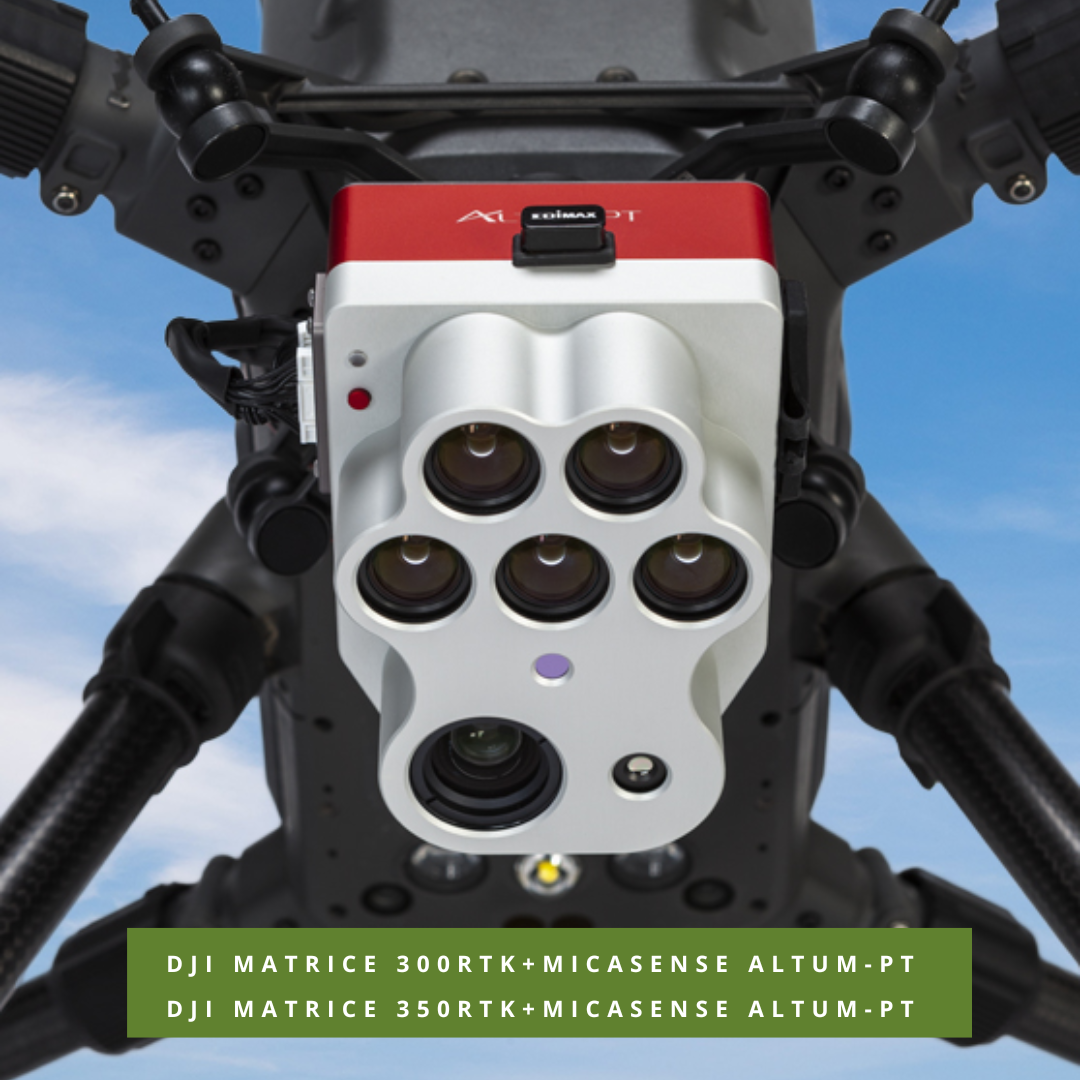
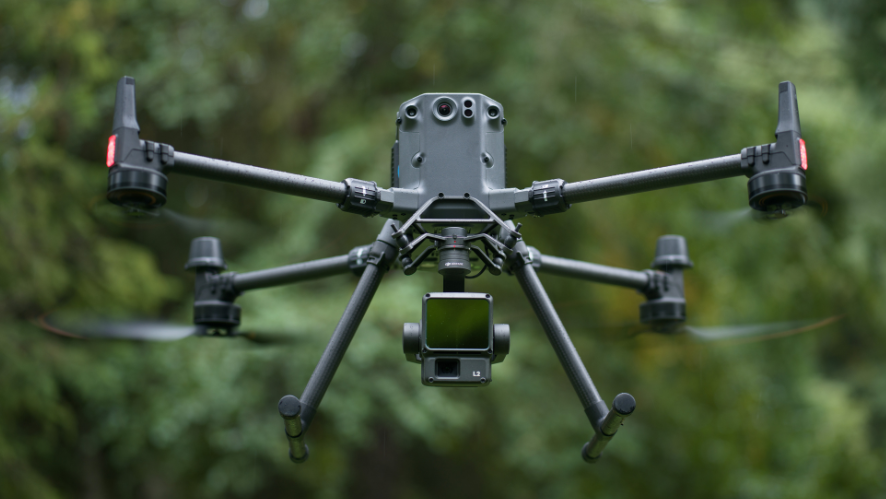
COMBO MATRICE 300/350 RTK + MICASENSE ALTUM PT
1x DJI Matrice 300 RTK or Matrice 350 RTK
1x Kit Battery
1x D-RTK
1x Trípode
1x MicaSense Altum-PT
Software Pix4D Fields

COMBO MAVIC 3 MULTISPECTRAL
1x DJI Mavic 3 Multispectral
1x Kit Battery
1x D-RTK
1x Trípode
Software Pix4D Fields
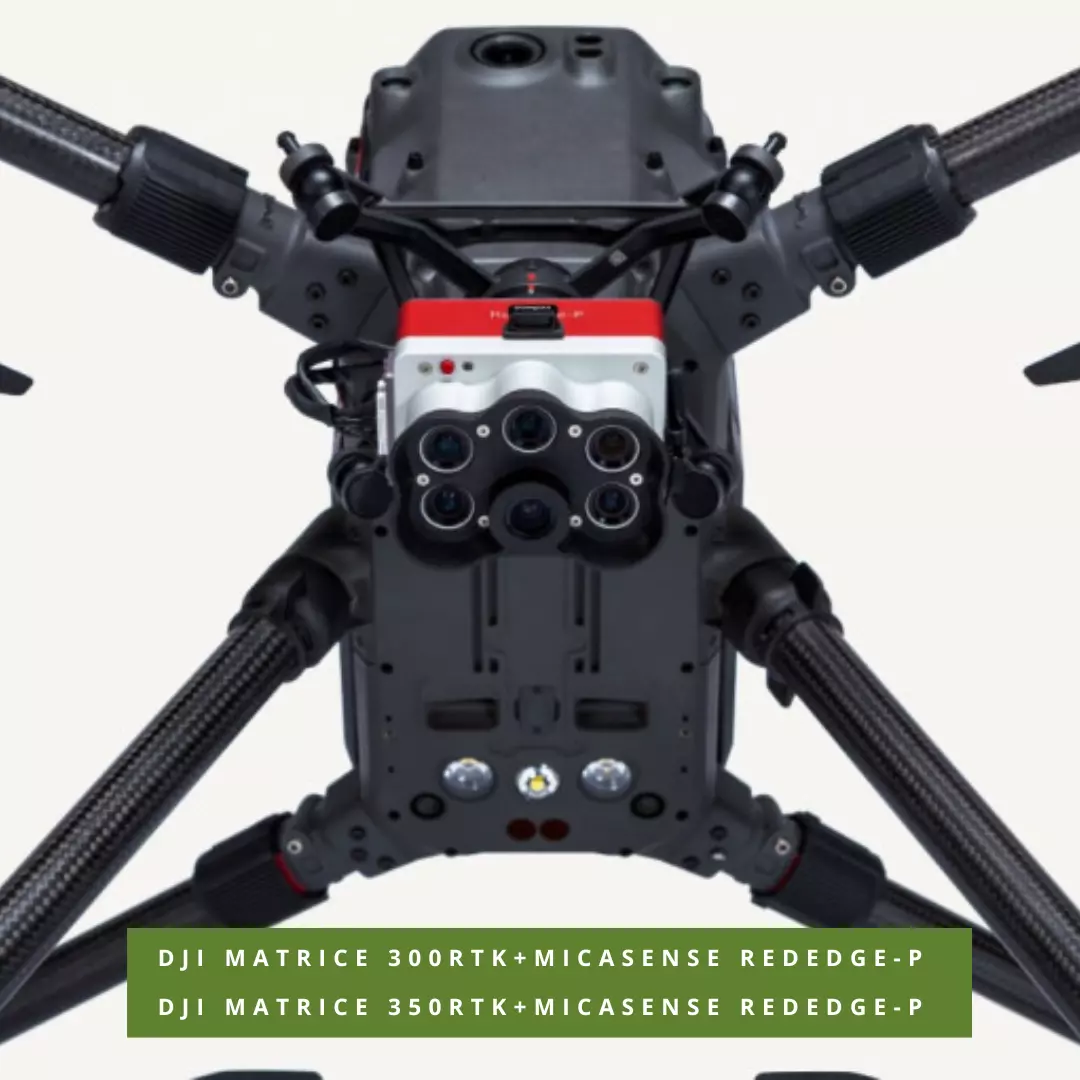
COMBO MATRICE 300/350 RTK + MICASENSE REDEDGE-P
1x DJI Matrice 300 RTK ou Matrice 350 RTK
1x Kit Battery
1x D-RTK
1x Trípode
1x MicaSense RedEdge-P
Software Pix4D Fields
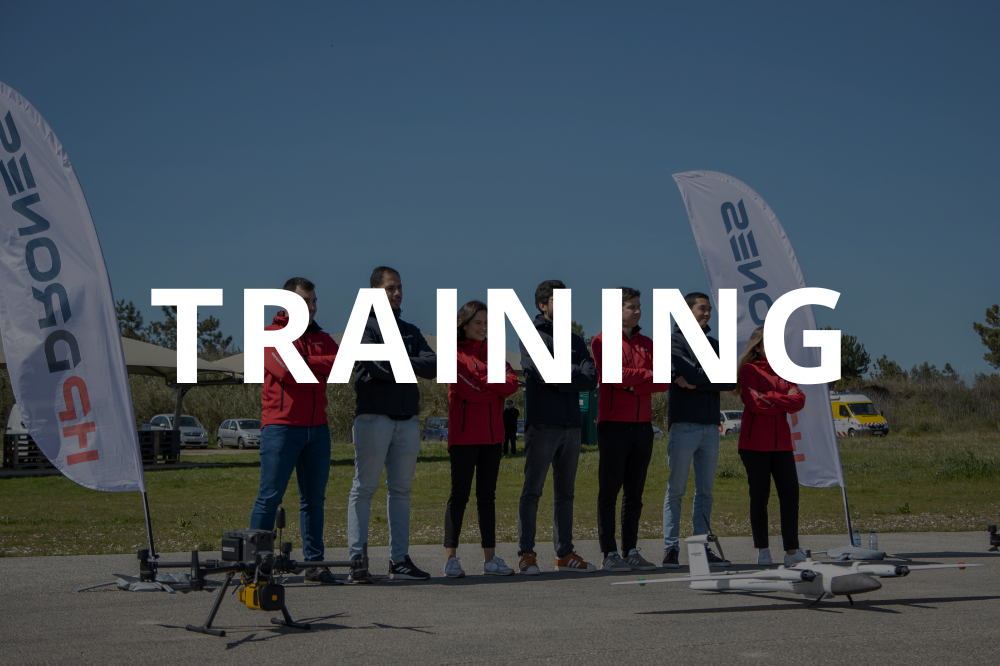
Precision Agriculture Training at HPDRONES Academy
At HPDRONES Academy, we offer a specialized course in Precision Agriculture designed for professionals and farmers who wish to incorporate UAV (drone) technology and advanced sensors into their agricultural practices. During the course, participants learn techniques for capturing multispectral imagery, processing vegetation indices such as NDVI, GNDVI, or NDRE, mapping areas of variability within the field, as well as monitoring plant vigor, early detection of pests and diseases, and efficient management of inputs (water, fertilizers, and pesticides). In addition, students learn to interpret the data obtained for agricultural decision-making, implementing action plans that optimize yield and sustainability. All of this is supported by hands-on experience through actual flights, leading software tools (such as Pix4D, QGIS, and others), and guidance from instructors with experience in real-world precision agriculture projects.
Click here for more information about the Precision Agriculture course.