

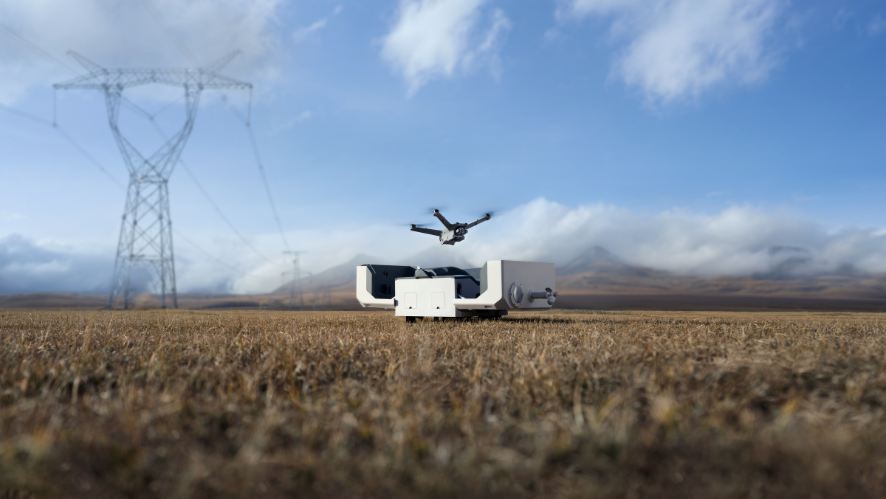
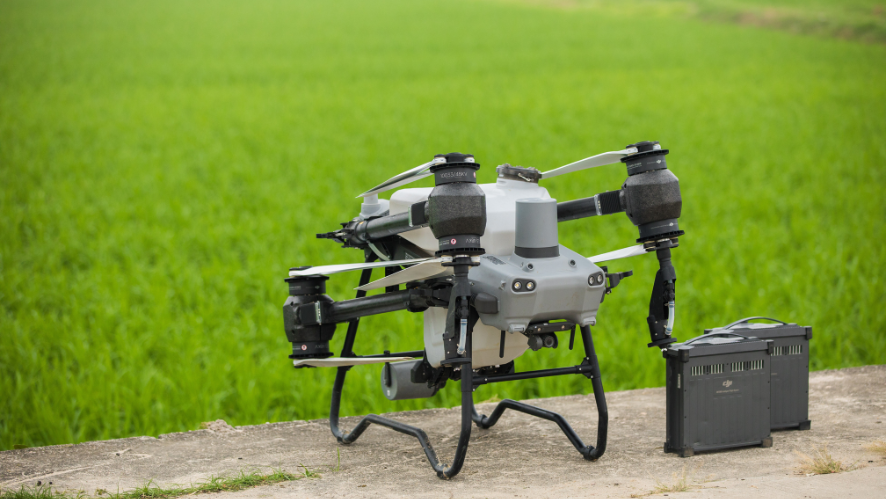
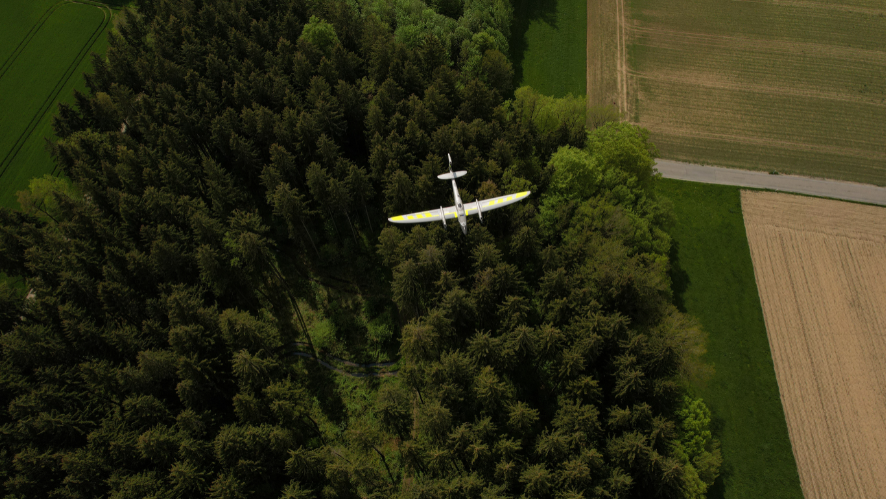
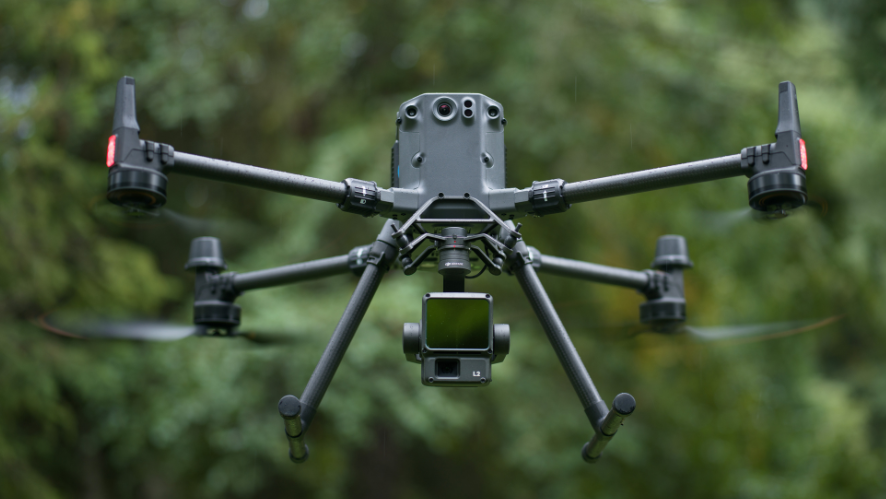
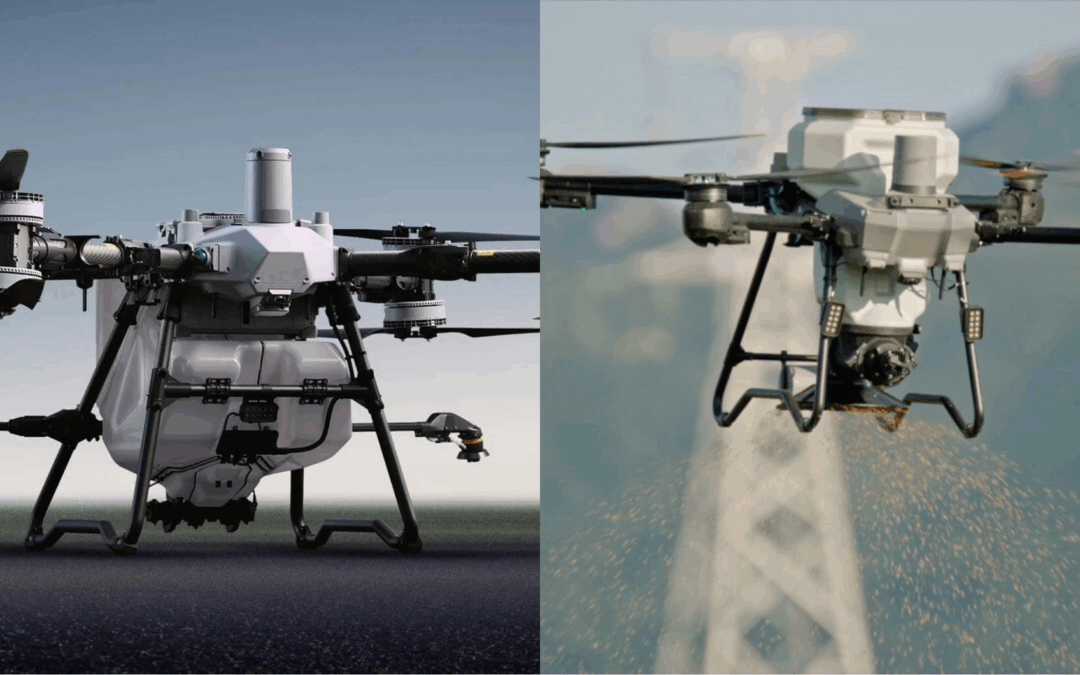
Modern agriculture is undergoing an unprecedented transformation, in which operational efficiency and sustainability are no longer differentiating factors but rather requirements for survival in the global market. At HPDRONES, we are closely following this evolution and today we explore the strategic duality offered by the new generation of DJI Agriculture: the colossal Agras T100 and the agile Agras T25P.
The choice between these two machines is not just a question of size, but of logistical suitability and agronomic objectives. While one redefines productivity on a large scale, the other perfects precision in highly complex scenarios.
1. Agras T100: The new frontier of mass productivity
The DJI Agras T100 is not simply a larger-scale drone, but represents a paradigm shift in field logistics. Designed for operations that require speed and volume, it is the ultimate tool for large areas.
Technical focus: Spraying and safety
The T100 introduces the dual atomized centrifugal spraying system, capable of reaching an impressive flow rate of up to 30 l/min. This technology allows for greater deposition width, ensuring coverage of large areas in record time.
To maintain this size, safety is managed by an active phase array radar system (360°) and a binocular vision system. This combination allows a machine of this size to operate with complete autonomy and safety, even on terrain with complex obstacles, intelligently avoiding objects in real time.
High-performance applications
This model is ideal for outdoor crops, such as:
- Corn and cereals: where the window of opportunity for phytosanitary treatments is extremely short.
- Rice: need for uniform coverage over large flooded areas.
- Solid spreading: with a capacity of up to 150 kg of spread load, the T100 is unbeatable in the application of fertilizers and seeds.
2. Agras T25P: Agility and precision in “challenging environments”
Not all agricultural challenges are found on endless plains. For orchards, hillside vineyards, and fragmented fields, HPDRONES’ answer is the Agras T25P.
Maneuverability and smart design
The difference with the T25P lies in its extreme agility. With a foldable and lightweight design, it has been conceived for single-operator operations. Although more compact, it does not sacrifice intelligence: it uses the same advanced mapping and obstacle avoidance algorithms as its “big brother.”
Case study: Viticulture in Portugal
In regions such as the Duero, rugged terrain and narrow terraces prevent the use of large drones or conventional tractors. The T25P excels in these scenarios:
- Drop precision: essential to avoid wasting high-value plant protection products.
- Difficult access: the ability to fly on steep slopes with precise terrain tracking ensures that each vine receives the appropriate treatment.
3. Data integration: the DJI SmartFarm ecosystem
For the advanced user, the drone is just the tip of the iceberg of a digital ecosystem. The real magic lies in integration through DJI SmartFarm.
| Functionality | Combined strategy |
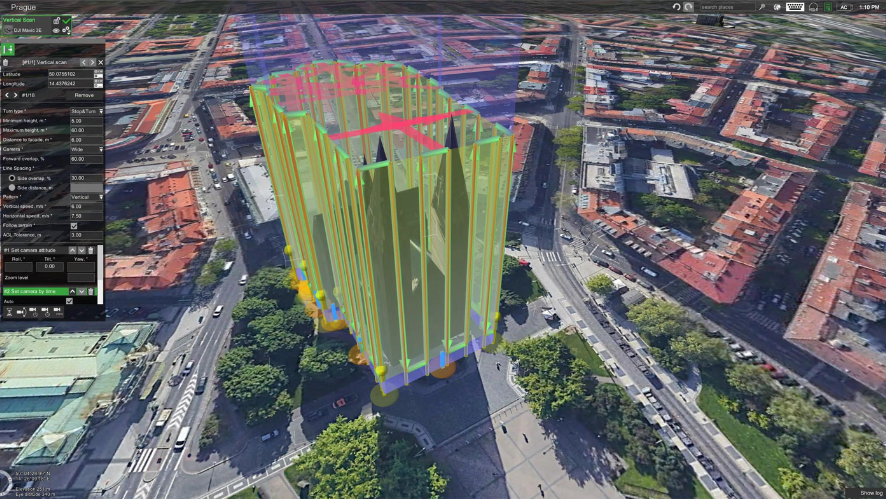
| Real-time mapping | The drone surveys the terrain and instantly generates the optimized flight path on the controller. |
| Local processing | Eliminates the need for time-consuming external processing, allowing immediate action in the field. |
| Combined strategy | The T25P can be used for scouting (detailed reconnaissance and mapping), while the T100 performs the heavy lifting. |
4. ROI and sustainability: the future is green and profitable
The adoption of this technology has a direct impact on the financial health of the farm and its environmental impact.
Precision versus traditional methods
The centrifugal atomization technology used in these models allows for a drastic reduction in the use of resources:
- Water savings: up to 90% reduction compared to conventional spraying.
- Chemical efficiency: 20-30% reduction in product waste, thanks to localized application and reduced drift.
Soil conservation
- Unlike tractors, drones do not compact the soil. This factor is essential, especially during rainy seasons, when heavy machinery can damage the soil structure and hinder root development.
Conclusion: Which one should you choose for your operation?
The choice between the Agras T100 and the T25P depends on the architecture of your farm. If your goal is scale and speed in large fields, the T100 is your weapon of choice. If your reality involves complex terrain, orchards, or the need for agile, individual operation, the T25P is the ideal companion.
At HPDRONES, we are ready to help you design the flight strategy that best suits your results. The future of agriculture has already taken off. Are you ready?
__________________________________________________________________________
[ninja_form id=4]