

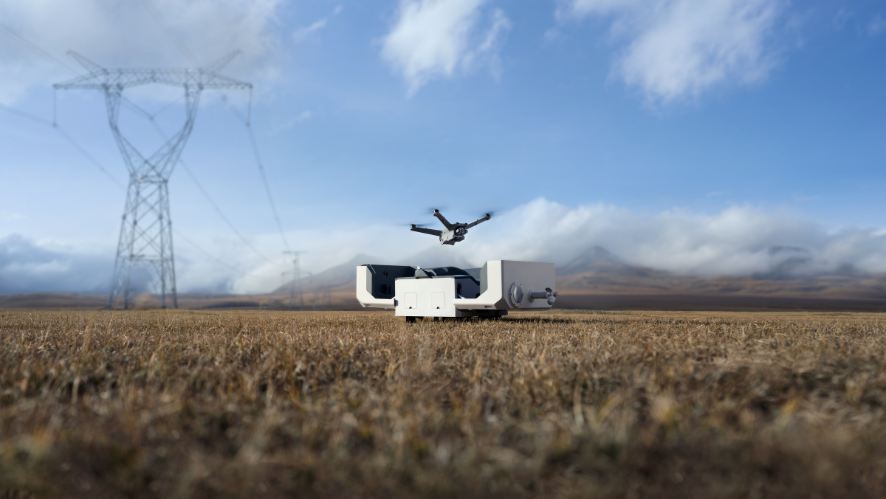
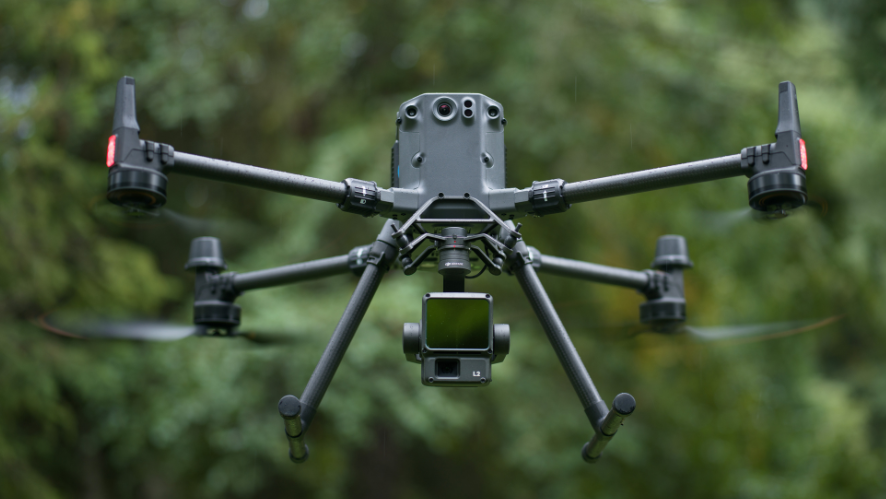

The DJI Zenmuse L3 is not just another LiDAR sensor, but a true modular revolution that integrates high precision and efficiency into a single system, dramatically optimizing aerial mapping and inspection projects.
-
Centimeter-level aerial precision and high efficiency
The L3 has been designed to meet the requirements of topographic surveys. Thanks to its advanced positioning and orientation (POS) system and synchronization with RTK (Real-Time Kinematic) technology, cloud data is georeferenced with impressive accuracy.
In practice, this means that this sensor has a vertical accuracy of only 3 cm (RMSE) at an altitude of 120 meters, allowing topographic surveys to be carried out at a scale of 1:1000 with a minimum, or even zero, ground control points (GCP). This translates into less time in the field and faster delivery of results.
-
Long-range, high-penetration LiDAR sensor
The L3 LiDAR module uses a 1535 nm laser, which not only offers exceptional detection range (up to 950 meters in ideal environments), but also has superior penetration capability.
This product is ideal for mapping terrain with dense vegetation. The narrower laser beam and higher energy allow more pulses to reach the ground through the foliage, creating a much denser and more accurate point cloud of the actual terrain, even in complex forest areas.
-
100 MP dual RGB camera system
In addition to LiDAR, the Zenmuse L3 integrates a powerful dual 100-megapixel RGB mapping camera system. This fusion of sensors is what really sets the L3 apart.
In a single flight, the user obtains an accurate geometric point cloud from the LiDAR and high-resolution aerial images. This allows for the generation of 100 MP digital orthophotos (DOM) and the coloring of the point cloud with real colors, which are essential for detailed visual inspection and asset documentation.
-
Adaptable scanning modes
The L3 offers different scanning modes that are perfectly suited to various operating scenarios, maximizing data collection efficiency.
Linear mode: optimized for corridor surveys, such as power lines or roads.
Star mode: ideal for mapping larger areas and ensuring uniform point density across the entire coverage area.
Non-repetitive scan mode: offers a higher probability of detecting thin objects, such as cables and branches, which is crucial for power line inspections.
-
Unified and efficient workflow
The Zenmuse L3 is part of a cohesive DJI Enterprise ecosystem, ensuring that the process, from flight planning to final data output, is simple and fast.
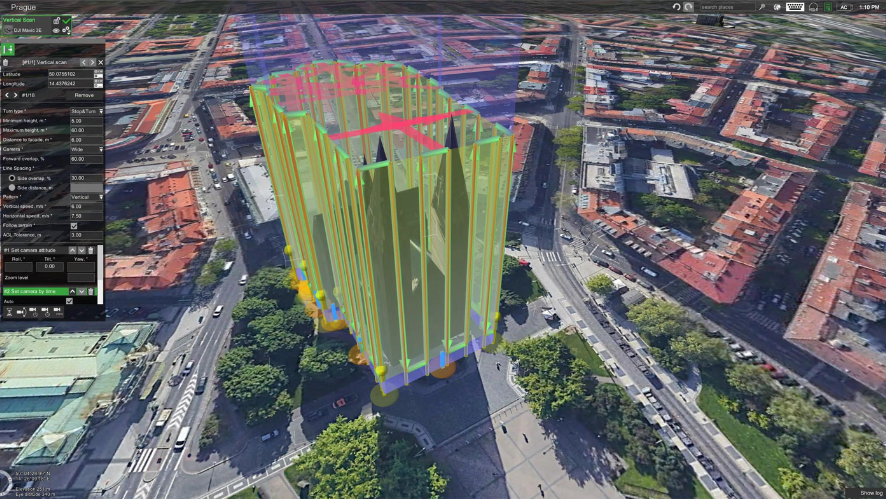
From mission planning in DJI Pilot 2 (with an intuitive preview of the results) to powerful data processing in DJI Terra and advanced editing in DJI Modify, the user has a highly optimized workflow. This integration can dramatically speed up project delivery time, allowing up to 100 km² to be covered per day at high altitude.
With DJI Zenmuse L3, HPDRONES offers its customers a solution that not only raises the standard of accuracy but also improves operational efficiency in surveying, infrastructure inspection, and asset management. It is the perfect combination of long range and centimeter-level detail.
______________________________________________________________